


















Vantage NodeBook a discovery call
Mezar Chakwa at a desk with a client, talking through the work
Fractional Chief AI Officer · Southern California

We put AI to work in your office.

Vantage Node is AI consulting for small businesses in Southern California: a fractional Chief AI Officer for trades businesses, manufacturers and logistics companies roughly $5–30M in revenue. We start with your numbers, price every leak, and determine whether AI is worth doing.

Book a free consultation

No pitch. No software to sell. You leave the call knowing whether there is real money in fixing this.

Air Oasis
Dello Russo Laser Vision
Event Rebels
Go2Marine
Hi-Tech Termite Control
LFS Marine
Powertrain
Price Self Storage
ShirtSpace
Sit 'n Sleep
Stoneside
The Super Dentists
Tax Group Center
Universal Funding
Vivid Racing

Who we work with

Vantage Node works with owner-led businesses whose paperwork is growing faster than the team can handle. Three kinds, mostly:

Machine shop floor with finished parts, calipers and a CNC machine

Machine shops, fabricators and small manufacturers.

Quotes written after hours, the same order keyed into three systems, certs and paperwork chased by hand, and one person who knows how everything works.

Warehouse aisle with racking and a packing bench

Trucking companies, 3PLs and warehouses.

Proof of delivery chased before an invoice can go out, dispatch running on the owner's phone at night, data retyped from one system into the accounting package.

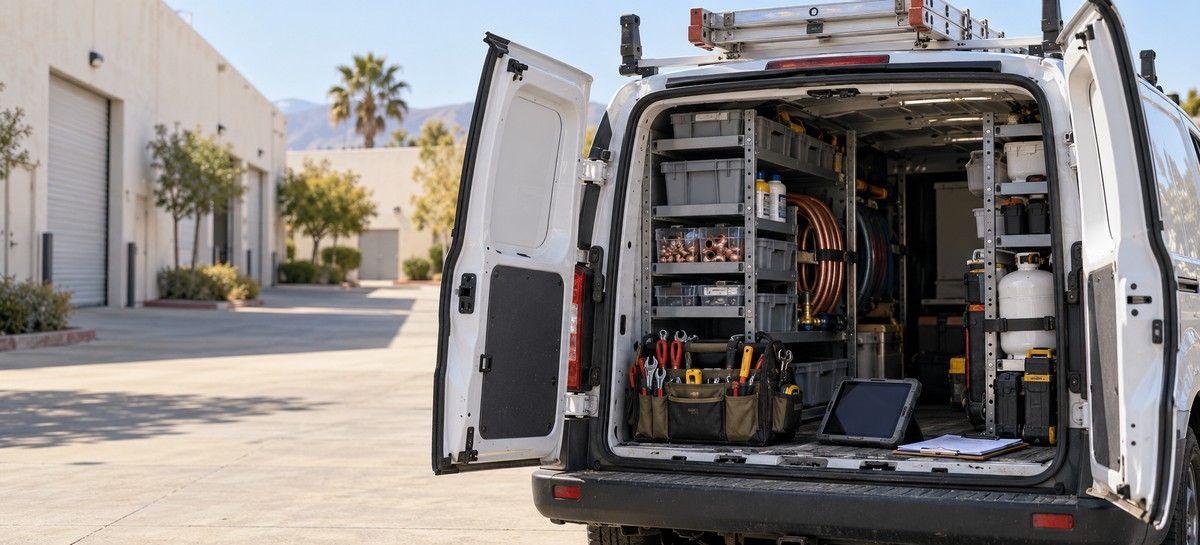
Contractor's van with doors open, shelving and tools inside

HVAC, plumbing, electrical and roofing contractors.

Missed calls while you are on a job, estimates written at the kitchen table, work done but never billed, a spouse running the office on top of everything else.

Typically $5–30M a year and 10 to 100 people, anywhere in Southern California. In person when it matters; most of the work happens remotely.

Under ten staff, or a franchise outlet? The assessment probably will not pay for itself at that size. Ask anyway; the answer costs nothing.

Book a free consultation

Does this sound like your office?

Owners describe the same six things in every industry we work in. None of them describes it as an AI problem.

  • 01Invoices fall through the cracks, and nobody notices until the cash does.
  • 02You are working after work: quotes, estimates and emails after the crew has gone home.
  • 03Someone enters the same data over and over, into one system and then the next.
  • 04You have texted the driver, the customer, the shop three times for the paperwork you need to bill.
  • 05You are doing everything three times because the systems do not talk to each other.
  • 06The one thing you cannot get rid of is the phone.

These are not technology problems. They are ownership problems: nobody in the building owns the question "which of this work should a machine do, and who checks it?" That is the seat Vantage Node fills, part-time.

The fix is rarely a new app. It is usually the apps you already pay for, connected, with a named person checking the output. Sometimes the fix is "not worth it yet", and you will be told that in writing, with the numbers that back it up.

Book a free consultation

What has Vantage Node shipped, with the numbers?

Every result below names where it was measured, who measured it, and what still needs a person. Where a number is not nailed down yet, the report says so rather than rounding it up. The format is the same one every Vantage Node client gets monthly: baseline, what changed, the number, what is next.

4 Star Electronics, Southern California · 2026

Quality inspection reports

Baseline

Every product shipped needed a quality test report assembled by hand from several systems: photos, test notes and observations pasted into a multi-page document. The heaviest kind took 8 to 10 hours; the lightest, 2 to 3. The QC manager built them, with one or two backups when he was out.


What changed

The QC team now types a sales order number and clicks one button. The first draft assembles itself, photos and notes in place, linked to the customer and the order so sales can see report status without phoning QC. A person checks and finalizes every one.

8 to 10 hours
To build the heaviest report before the change
30 minutes
To build a report after the change
under $100
Tooling cost
What broke

Two trial-week defects, both fixed before go-live: photos not loading, and sales order numbers potentially matching identical customer PO numbers. If a source system changes, the tool stops until someone fixes it, and the team knows that.

Next

A 60-day number, mid-December 2026.

The number

Reports of every type now take 20 to 30 minutes to finalise, timed by the QC team across the first two weeks of live use, October 2026. Tooling cost was under $100. Roughly 80 hours a month returned to the QC team.

Book a free consultation
4 Star Electronics · 2026

Inbound lead quality

Baseline

The advertising platforms were being told a form fill was a win, so money flowed to searches that produced form fills, including leads that were considered junk. Real quote requests ran at about 100 a day.

What changed

Offline quotes and booked orders now feed back into the platforms automatically, so the campaigns learn from what led to a sale, not from what led to a form submission.

100 a day
Quotes per day before the change
180 a day
Quotes per day after the change
$1,000 a day
Reallocated budget toward higher-quality leads.
Next

Pull monthly quotes and orders for the three months before and the first month after.

The number

About $1,000 a day of spend that bought junk leads was moved, not cut, and daily quotes rose to 180 per day on a flat budget in the first month.

Book a free consultation
Ignite Visibility · 2020

Pre-sale audit & proposal

Baseline

Every prospect got a free audit of their marketing, built by hand by the data team at 2 to 4 hours each, about eight a week. A budget request for a full-time analyst to absorb the load was stuck in approval.

What changed

The data pull and the formatting assembled themselves into one document. An analyst wrote the paragraph of findings and checked the layout before it went to the salesperson.

2 to 4 hours
Per audit before the change
40 minutes
Per audit after the change
Why it matters here

This was a diagnostic production line built years before today's AI tools existed. The AI Readiness Assessment is the same idea, pointed at your business.

The number

About 40 minutes per audit, almost all of it the human paragraph and a spot check. The analyst hire was never made, and an $80,000 annual cost was saved.

Book a free consultation
Ignite Visibility · 2022

Client onboarding

Baseline

When a deal closed, each department had to find its own work inside the signed contract. Smaller departments were routinely not told work had been sold for them; analytics work worth $20,000 to $30,000 a month was being found by searching the sales system by hand. Contract to first work: five to six weeks.

What changed

A closed deal now built each department's checklist, assigned it to the person with the lightest load, and sent the client one combined welcome message asking for what each service needed.

5-6 weeks
Contract to first work before
2 weeks
Contract to first work after
What was not fixed

Assignment went by task count, not task weight, so a junior with ten small jobs could draw the biggest client. The limit was raised, no department would track weight, and "good enough" was chosen on purpose. Half of this win was not software at all: getting sales to log what they sold and getting every manager to write down their tasks for each service onboarding.

The number

Hidden deals stopped being hidden. Contract to first work fell to two weeks; the remaining two weeks were the client's own access and scheduling, which no system can shorten.

Book a free consultation
Mezar Chakwa, founder of Vantage Node
Who leads the work

You work with me, start to finish.

Mezar Chakwa · Founder, Vantage Node · Southern California

I've run the systems behind a company's numbers since 2000: the reports, the ad spend, the handoffs between departments. Since 2023, most of my work has come down to one question: which jobs should a machine do, and does it actually pay?

What that means for you

  1. I've worked inside a business like yours.

    At 4 Star Electronics, an independent electronic components distributor, I saw how quotes, orders and follow-ups really move in an owner-led company.

  2. I judge the work the way an owner does.

    At Ignite Visibility I built three service lines from nothing to $10M. A tool that looks good in a demo but doesn't earn its keep gets cut.

  3. I treat your data like it matters.

    I started as a Security Forces Officer in the U.S. Air Force, and later owned security, access and governance across 70-plus systems. Your data never goes into a public AI tool without your written OK.

How we work

Three steps. You decide at each one, and the price of the next step is always visible before you take it.

  1. 1

    A free 40-minute discovery call.

    Bring the one job that eats the most hours in your week. You get a straight answer on whether there is real money in fixing it. No slide decks. No sales pitches.

  2. 2

    The AI Readiness Assessment.

    $2,500, fixed, about two weeks. Every leak worth fixing, priced per year from your own numbers, in a written report that is yours to keep.

  3. 3

    The seat, if the numbers justify it.

    A fractional Chief AI Officer: one named person who decides what to build, gets it built, trains your people, and sends you a one-page results memo every month. Three months minimum, then month to month. You can stop any month after that if it is not paying for itself.

What the $2,500 AI Readiness Assessment includes

What it is.

A fixed-fee, two-week answer to one question: where is this business spending payroll on work a machine could do, what is each leak worth per year, and what should happen first? Not a software pitch. A written report in dollars and hours, built from your numbers, not an industry average.

What actually happens.
  • A 60-minute interview with you, the owner, about the business, the money and where the hours go.
  • Half an hour apiece with two or three of the people carrying the admin load: whoever runs the office, the operations lead, the person who does the books. Owners tend to know which jobs hurt; the people doing them know why. Where those two stories differ is usually where the first project is.
  • A day in your office with the work itself: following a quote from request to send, an invoice from job to payment, an enquiry from the inbox to a reply, with a stopwatch on the three or four jobs that happen most.
  • A tool audit: everything you pay for that claims to be AI, what it costs each month, and who opened it last week.
  • A look at where your data lives and where it is already leaking into free AI tools without anyone deciding that was fine.
What you walk away with.

A written report containing:

  • An opportunity table: five to eight places money is leaking, each priced per year in hours and dollars, with the numbers clear and conservative.
  • A one-page risk snapshot of your data and AI exposure.
  • A readiness score, and what to fix before anything gets built.
  • A recommended sequence: what to do first, second and third, and why in that order. The first item is usually something you can measure within thirty days.
  • A section on what Vantage Node recommends against.
Timeline.

Two weeks from the start date. Week one is inside your business. Week two, the numbers get built and the report gets written. Then a findings meeting, in person or on video, where the report is walked through, never just emailed.

Fee.

$2,500, fixed, invoiced on booking. If you sign on to the monthly seat afterwards, the full $2,500 comes off your first month.

Yours either way.

You keep the report whether or not we do any further work for you. Take it to any other provider, or act on it yourselves; you will be told that in writing before you pay.

If there is not much to find:

The report says so, in writing, with what was checked. Some businesses are not ready yet, and some only need one or two fixed projects and no ongoing seat. Being told that is part of what you are paying for.

What it takes from your team:

Roughly three to four hours of meetings across the two weeks (an hour with you, half an hour with each of two or three staff, and the findings meeting), plus one day of people working normally while someone observes.

What we refuse to do

  1. 01Sell or resell software, or take vendor commissions.
  2. 02Bill by the hour, or lock a client into a contract beyond a three-month initial term.
  3. 03Let AI handle money documents, hiring decisions, published content or complaint responses without a named human's approval.
  4. 04Quote an automation build to a business whose knowledge lives only in people's heads; documentation comes first.
  5. 05Invent a number. Every figure traces to the owner's data or is labelled an estimate.

Most AI projects that fail in businesses this size fail the same three ways: the wrong task was picked, nobody briefed the system properly, or nobody owned it after launch. None of these are technology problems. Owning them is the job.

Book a free consultation

How to start: a free 40-minute consultation call

Forty minutes with Mezar, where you bring the one task that eats the most hours in your week: who does it, how often, roughly how long it takes. He asks how the work actually moves through your business. At the end, you get a plain answer: either "there is money here and an assessment is worth it," or "there is not and here is what to do instead."

Please note: It needs to be you, the owner (not a delegate). Most of the questions during the call are about the business, not the technology.

Book a free consultation

You'll get a reply within one business day

Your role Who you are in the business.
Annual revenue A rough range is fine.
How many people work there, including office and admin staff?
What prompted you to get in touch? Pick the closest one.
When would you want to start?
How did you find Vantage Node?
Contact

No sales sequence. You will hear from Mezar, not an autoresponder chain.

Questions owners ask before booking

Roughly, yes. But what you are paying for is not the guess; it is the numbers, from your own business, that tell you which fix is worth doing first and which is not worth doing at all.